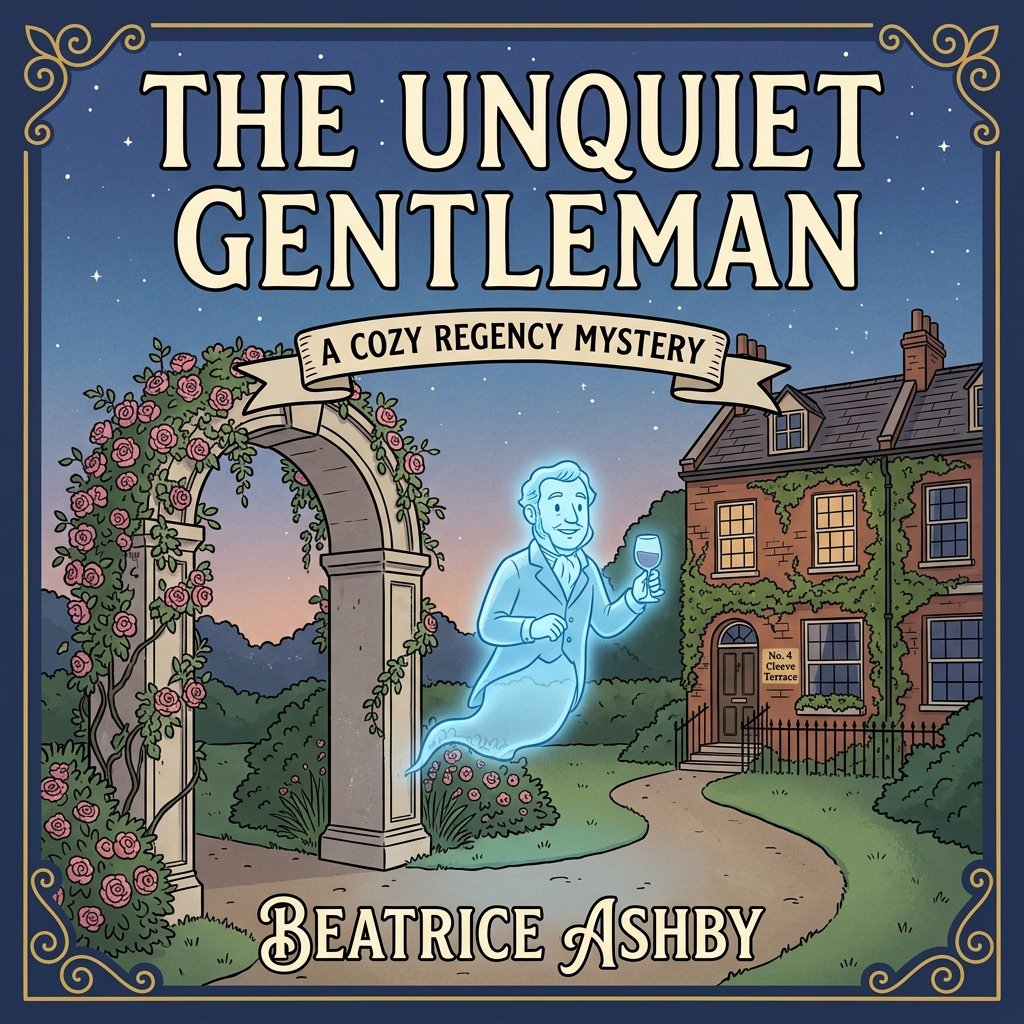

People often ask what to read while they wait for the next Wexcombe mystery, or what set me down this path in the first place. The honest answer is a great many books, most of them read with a pot of something steeping at my elbow. Here is a small, fond, entirely unscientific shelf.
The Golden Age Puzzles
You cannot write a mystery in English and not bow first to Agatha Christie. For our purposes, reach for Miss Marple before Poirot: an underestimated spinster who sees an entire village at a glance and misses nothing, least of all the worst in people. The whole DNA of the cozy is in her, the notion that a quiet woman with good manners and sharper eyes might be the most dangerous person in the room.
Then Dorothy L. Sayers, for Lord Peter Wimsey, and for proof that a detective novel can carry a beating heart and a real love story and still play the puzzle scrupulously fair. These two taught me the contract every mystery signs with its reader: the answer must be on the page.
Regency Manners and Romance
Jane Austen is not, strictly, a writer of murders. But everything I know about a drawing room as a battlefield, about a single raised eyebrow doing the work of a drawn sword, I learned from her. The manners are the weapon; I have simply added a body.
Georgette Heyer practically built the Regency romance as we know it, all banter and bonnets and slow-burning sense, and wrote a shelf of sparkling detective novels besides. Read her for the wit, and for the period rendered so vividly you will smell the beeswax.
The Uncanny, Lightly Done
My own ghost owes a debt to a long English tradition of hauntings that are more comic and tender than frightening. Oscar Wilde's "The Canterville Ghost" is the patron saint of the type: a spirit far more put-upon than terrifying, undone entirely by the cheerful good sense of the living. Sir Crispin would recognize a kindred soul, and resent him for it.
Historical Cozies to Devour Now
If you want company while you wait, Rhys Bowen's Royal Spyness books are pure delight: a well-born heroine of badly reduced means, forever tripping over bodies among the aristocracy. She is a woman after Hetty's own heart, and the comic timing is impeccable. For readers who like their Regency with sharper edges and real grit beneath the gloss, C. S. Harris and the Sebastian St. Cyr novels will keep you up far too late.
None of this is required reading, of course. But pour yourself a cup, pick one, and you will understand the company Wexcombe hopes to keep. And if I have missed a favorite of yours, the contact page is right there. I am always taking recommendations, preferably with a biscuit.